Award-Winning Special Chapagetti
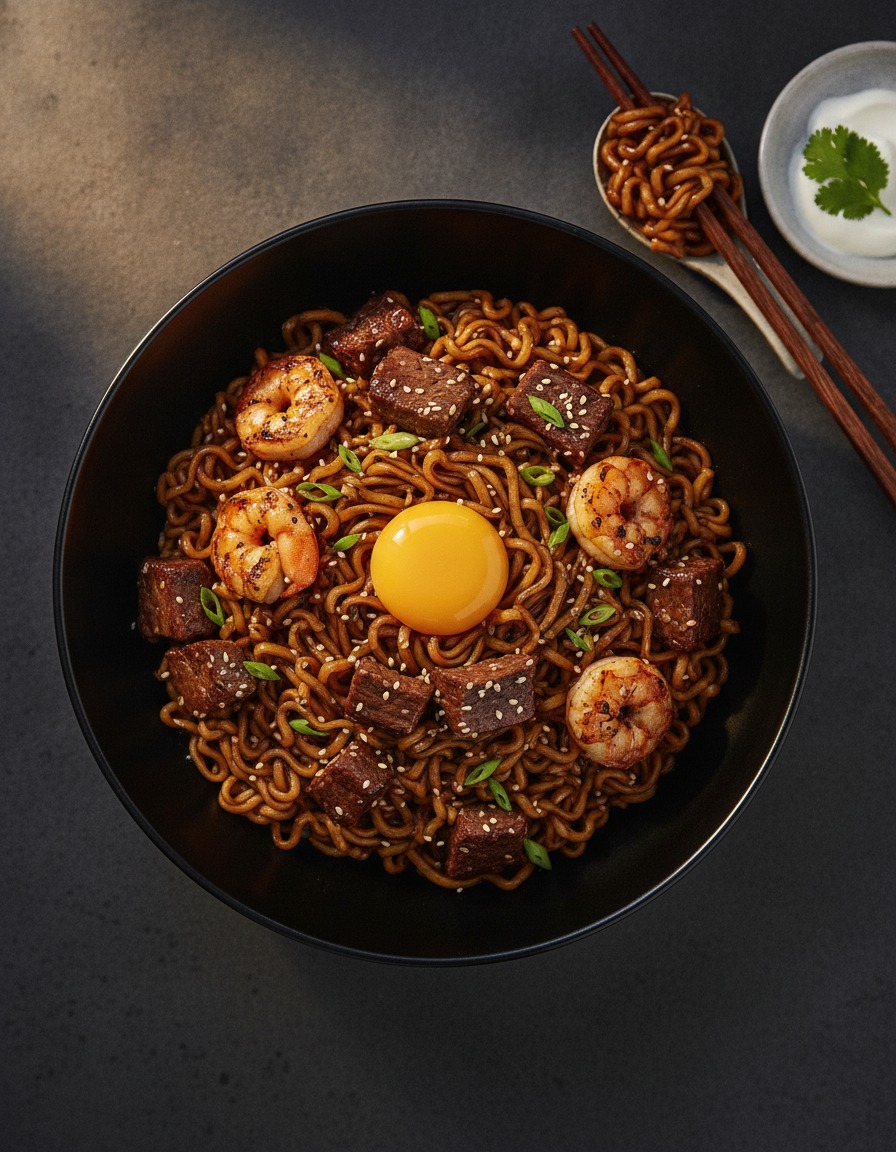
This is a gold-medal-winning Chapagetti recipe. By rendering rich pork fat from pork belly, infusing it with aromatic green onion and garlic, and adding a touch of oyster sauce and chili powder, we elevate a humble instant noodle into a premium, savory, and slightly spicy gourmet dish.
Servings Ingredient Calculator
Default: 1 serving (Adjusts quantities automatically)
🥬 Main Ingredients
- Chapagetti1 pack
- Pork belly100g
- Green onion1/2 stalk (approx. 40g)
- Garlic3 cloves
- Water600ml
🥣 Sauce & Seasoning
- Oyster sauce1/2 tbsp
- Korean chili powder (Gochugaru)1/2 tbsp
- Noodle water100ml (approx. 10 tbsp)
🌿 Toppings & Garnish
- Egg yolk1
- CucumberA pinch (shredded)
- Toasted sesame seeds1/2 tsp
- Truffle oil (optional)3-4 drops
🔄 Ingredient Substitutes & Tips
| Original Ingredient | Recommended Substitute | Characteristics & Tips |
|---|---|---|
| Oyster sauce | Dark soy sauce 1/2 tbsp + Sugar 1/4 tsp | Substitute 1:1; slightly less umami than oyster sauce, but maintains a good sweet and salty balance. |
| Truffle oil | Sesame oil | Use the same amount (3-4 drops); replaces mushroom aroma with a rich, nutty Korean flavor. |
| Pork belly | Bacon or Canned ham (Spam) | Substitute 100g equally; adds a salty, savory, and slightly smoky taste. |
📊 Estimated Nutrition (Per Serving)
👨🍳 Cooking Steps
Finely chop the green onion and thinly slice the garlic. Cut the pork belly into bite-sized pieces (about 1.5cm wide).
Boil 600ml of water, then add the noodles and vegetable flakes. Cook for 4 minutes. Reserve 100ml of noodle water before draining.
In a cold pan, add the pork belly and cook over medium heat. Once it starts rendering fat, add the green onion and garlic.
Reduce heat to low. Add 1/2 tbsp of oyster sauce and 1/2 tbsp of chili powder into the pork fat, stir-frying quickly for 20 seconds.
Add the drained noodles, 100ml of reserved noodle water, and the Chapagetti powder soup to the pan. Stir-fry over high heat for 1 minute.
Turn off the heat, mix in the enclosed olive oil, and transfer to a plate. Top with egg yolk, cucumber, sesame seeds, and truffle oil.
🌟 Pro Chef Tips
- • Always reserve at least 100ml of starchy noodle water to keep the sauce glossy and prevent dryness.
- • Mixing the raw egg yolk with the hot noodles right before eating creates an incredibly creamy, rich texture.
- • Slicing and frying the garlic until slightly crispy adds a pleasant garlic-chip-like crunch to the dish.
⚠️ Avoid Common Pitfalls
- ❌ Failing to lower the heat when adding chili powder will burn it, leaving a bitter, burnt aftertaste in the sauce.
- ❌ Overcooking the noodles in the boiling stage will result in mushy, soggy noodles after stir-frying.
🧂 Spice & Seasoning Adjustments
- • If you prefer a sweeter black bean flavor, slice 1/4 onion and stir-fry it with the pork belly.
- • For extra heat, finely chop 1 Korean Cheongyang chili and fry it along with the green onions.
🧊 Storage & Reheating
- • Noodle dishes are best consumed immediately after preparation.
- • Storing and reheating is not recommended as noodles will swell and lose texture.
❓ Frequently Asked Questions
Q. Can I use thinly sliced pork belly instead?
A. Yes, thinly sliced pork belly releases fat even quicker and wraps around the noodles beautifully. Slightly reduce the cooking time.
Q. Won't it be too salty with oyster sauce?
A. Because of the added pork, vegetables, and noodle water, 1/2 tbsp of oyster sauce balances the flavor and adds depth without making it overly salty.
Q. Can I use Gochujang (chili paste) instead of Gochugaru (chili powder)?
A. Gochujang can make the sauce thick and heavy. We strongly recommend Gochugaru (powder) for a clean, spicy finish.
Q. Why is it essential to keep the reserved noodle water?
A. Starchy noodle water emulsifies the oil and dry powder soup together, coating the noodles smoothly without drying out.
Q. What oil can I use instead of truffle oil?
A. If truffle oil isn't available, a few drops of sesame oil or chili oil serve as a fantastic alternative.